Overhead Crane Selection
How to Choose an Overhead Crane: 12 Parameters Buyers Must Define
Choosing an overhead crane is not simply a matter of naming a capacity. A reliable crane quotation depends on how accurately the buyer defines the load, working area, operating cycle, building interface, controls, environment, safety basis, and project scope.
Reading time: 18 minutes
Audience: Procurement & Engineering Teams

An overhead crane is part machine, part building system, and part production process. Two cranes with the same rated capacity can require very different girders, hoists, motors, brakes, wheels, controls, safety functions, runway reactions, and maintenance provisions. A request that only says “10-ton overhead crane, please quote” forces every supplier to make different assumptions, which produces quotations that cannot be compared responsibly.
This overhead crane selection guide explains the 12 parameters a buyer should define before issuing an RFQ. It is intended for new factories, production expansions, replacement projects, and facility upgrades involving industrial overhead crane systems.
| Buyer Decision | Select a crane configuration and technical duty that safely handles the real load while fitting the building and production process. |
| Required Inputs | Load cases, span, runway length, lift, headroom, duty cycle, speeds, building data, power, environment, attachments, standards, and supply scope. |
| Main Risk | Incomplete requirements create non-comparable prices, building conflicts, insufficient lift or duty, change orders, and lifecycle cost. |
| Next Step | Complete the 12-parameter RFQ checklist and require every bidder to state classifications, wheel loads, scope, assumptions, exclusions, and deviations. |
To choose an overhead crane, define the maximum suspended load, span, runway length, lifting height, headroom, duty cycle, motion speeds, crane configuration, building interface, power and controls, operating environment, lifting attachment, safety standards, and installation scope. A qualified manufacturer should then engineer the crane and clearly state all design assumptions in the quotation.
Why These Parameters Must Be Defined Before the RFQ
Crane selection is a system-engineering decision. Capacity affects the hoist, bridge, end trucks, wheels, runway reactions, and often the supporting building. Span affects girder depth, self-weight, deflection, wheel loads, shipping, and erection. Duty affects fatigue design and the thermal rating of motors and brakes. Speed affects productivity, motor power, braking, controls, and load stability.
The buyer does not need to design the crane. The buyer's job is to provide verified application data, project constraints, and commercial boundaries so qualified manufacturers can engineer the correct solution. The 12 sections below form a practical pre-RFQ specification.
1. Rated Capacity and Load Characteristics
Start with the heaviest process load, but include every item suspended from the hook. A lifting beam, C-hook, magnet, grab, spreader, vacuum lifter, coil tong, and permanent rigging all consume crane capacity.
A 10-ton process load lifted with a 1.5-ton spreader is not a 10-ton suspended load case. The supplier also needs the load dimensions, center of gravity, lifting points, temperature, stability, and orientation. Identify tandem lifts, load turning, accidental snagging risk, shock loading, or off-center picks. Side pulling should not be accepted as a routine operating method; if the process appears to require it, the material flow or lifting arrangement should be redesigned.
Information to send the supplier
- Maximum process-load weight and normal operating weight range
- Weight of attachments, lifting beams, and typical rigging
- Load dimensions, center of gravity, pick points, and orientation
- Number of hoists and whether main and auxiliary hoists may operate together
- Any future load increase or special operating case
Do not add an arbitrary capacity margin. Unnecessary oversizing increases crane self-weight, wheel loads, structural demand, and price. Provide the real load cases and future requirements; require the manufacturer to apply the design factors of the governing standard.
2. Crane Span, Runway Length, and Hook Coverage
The crane span is the transverse distance between runway rails, normally measured from rail centerline to rail centerline for a top-running bridge crane. The runway length is the longitudinal distance available for bridge travel. The useful hook coverage is smaller than the building bay because trolley geometry, end trucks, buffers, columns, walls, and clearances limit the hook's approach.
For a new building, coordinate rail gauge, runway elevation, support spacing, clearances, and crane reactions before the structural design is frozen. For an existing building, do not estimate span from an architectural floor plan. A site survey should verify rail gauge at several points, elevation variation, alignment, runway length, column locations, rail condition, and overhead obstructions.
Coverage questions the buyer must answer
- What rectangular production area must the hook serve?
- Where are the pick-up and set-down points?
- How close must the hook reach to walls, machines, furnaces, racks, or loading doors?
- Are there columns, ducts, lights, pipes, cable trays, sprinklers, or other cranes in the operating envelope?
- Will two or more cranes share the same runway?
A dimensioned plan and building section showing rail centerlines, runway length, rail elevation, floor level, building grid, obstructions, production equipment, and required hook coverage.
3. Lifting Height, Headroom, and Hook Approach
Lifting height is the vertical travel from the lowest required hook position to the highest required hook position. It is not the same as building height. The calculation must include pits, platforms, machine height, load height, rigging length, lifting attachments, and the elevation needed to clear nearby equipment.
Headroom is the vertical space consumed by the crane and hoist above the highest hook position. Hook approach is the closest horizontal distance the hook can reach to the runway ends or building sides. These dimensions can determine whether the project needs a standard hoist, low-headroom hoist, single-girder crane, or double-girder trolley.
In a low existing building, a lower-cost crane with poor headroom may fail to achieve the required lift. Conversely, raising the roof or runway solely to fit a crane can cost more than selecting a better-optimized crane arrangement.

Lowest hook elevation, highest hook elevation, required clear lift, minimum side and end hook approach, runway-rail elevation, and lowest overhead obstruction.
4. Duty Classification, Load Spectrum, and Operating Cycle
Rated capacity tells the manufacturer the maximum permitted suspended load. Duty data tells the manufacturer how much work the crane must perform throughout its design life. Both are essential.
A maintenance crane lifting its rated load twice per month is fundamentally different from a production crane handling material every few minutes across multiple shifts. Even when both cranes are rated at 20 tons, the production crane may require different motors, brakes, gearboxes, wheels, bearings, electrical equipment, cooling, and structural fatigue design.
Different markets use ISO, FEM, CMAA, and other classification systems. Do not choose a class from a one-line description or assume that classes from different systems convert directly. ISO 4301-1 classifies cranes and mechanisms from service conditions including the total number of working cycles, load spectrum, and average displacements. Provide real operating data and require the supplier to state the proposed crane and mechanism classifications.
Operating data required
- Operating hours per day, shifts per week, and working days per year
- Average and peak lifts per hour
- Typical load, maximum load, and percentage of lifts near rated capacity
- Average hoist, trolley, and bridge travel per cycle
- Required design life and expected future production increase
- Process criticality and acceptable downtime

Under-specifying duty can shorten component life and increase downtime. Unnecessarily specifying the most severe class can increase capital cost. Base classification on the actual process data and require the bidder to explain the selection.
5. Hoist, Trolley, and Bridge Speeds
Higher speed does not automatically create higher productivity. The correct speed is the speed that achieves the required production cycle while maintaining stable, safe control of the load.
A warehouse crane traveling over a long bay may benefit from a higher bridge speed. Assembly, mold handling, turbine maintenance, and precision positioning usually need slow approach speeds, smooth acceleration, and controlled stopping. Excessive acceleration can increase load sway and positioning time, cancelling the benefit of a high maximum speed.
Ask the manufacturer to evaluate single-speed, two-speed, and variable-frequency-drive control. VFDs can provide adjustable acceleration and deceleration, soft starting, lower mechanical shock, and low-speed positioning. The quotation should still define drive brands, motor compatibility, braking logic, enclosure cooling, diagnostics, service access, and spare-parts support.
Define the motion requirement
- Required production cycle time and travel distances
- Maximum and minimum useful speed for each motion
- Required low-speed or micro-speed positioning ratio
- Acceptable load sway and stopping accuracy
- Whether motions must operate simultaneously
- Need for anti-sway, automatic positioning, synchronization, or restricted zones
6. Crane Configuration
The configuration should follow the required capacity, span, duty, lift, headroom, hook approach, building support, maintenance access, attachment type, and future process needs. It should not be selected from preference alone.
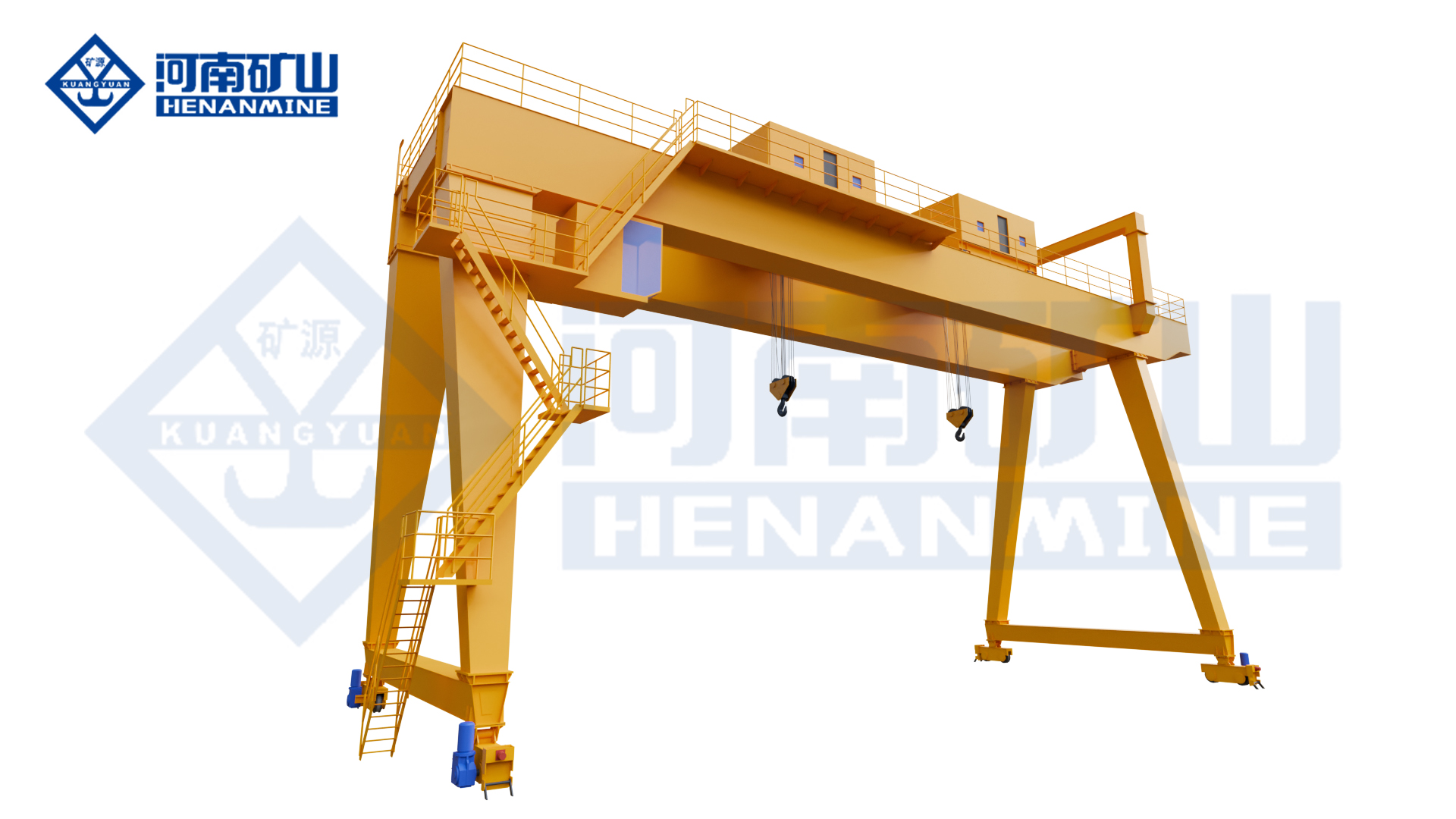
A single-girder top-running crane can be an efficient general-purpose solution when the application falls within an appropriate design range. A double-girder overhead crane is often considered for higher capacities, longer spans, severe service, top-running trolleys, walkways, auxiliary hoists, improved hook height, or specialized attachments. Underhung cranes can provide useful coverage where the runway is suspended from a roof or freestanding support structure, provided the support system is properly engineered.
Ask every bidder to explain the proposed configuration and provide general-arrangement dimensions, hook approaches, headroom, wheel loads, maintenance access, platforms, electrification, and exclusions.
7. Building, Runway, Wheel Loads, and Structural Interface
An overhead crane transfers vertical, horizontal, dynamic, and sometimes exceptional forces into the runway and supporting structure. The crane manufacturer must provide design reactions and interface data; the responsible structural engineer must verify the runway, columns, bracing, connections, and foundations.
For a new facility, early coordination can optimize the combined cost of crane, runway beams, columns, and foundations. For an existing facility, never assume an old runway can accept a heavier or faster crane. Crane self-weight, wheel spacing, number of wheels, acceleration, skewing forces, impact allowances, end-stop loads, rail condition, and structural deterioration can all affect suitability.
Structural data to request from the crane supplier
- Maximum and minimum wheel loads for governing crane positions
- Longitudinal and transverse horizontal reactions
- Wheel spacing, wheelbase, number of wheels, rail size, and crane self-weight
- End-stop and buffer forces where applicable
- Runway alignment, elevation, deflection, and tolerance requirements
- Loads from walkways, platforms, conductor systems, and maintenance access
First survey the runway geometry and physical condition. Then verify structural capacity using the proposed crane's actual wheel loads and horizontal forces. The statement “this building previously had a crane” is not an engineering verification.
8. Power Supply, Electrification, and Control Method
State the site voltage, frequency, phase, allowable variation, grounding arrangement, and required control voltage. International projects should not assume that electrical standards, enclosure practices, motor ratings, or component availability are identical in every country.
The crane may receive power through conductor bars, festoon cables, cable reels, or another engineered system. The choice depends on runway length, travel speed, current demand, environment, building layout, service access, and whether multiple cranes share the runway.
Operator control may be by pendant, radio remote control, cab, fixed station, or an automated supervisory system. Select the control method from operator visibility, safe standing position, load path, process hazards, emergency response, radio management, backup control, and maintenance diagnostics.
Electrical information for the RFQ
- Supply voltage, frequency, phase, and grounding system
- Power take-off location and feeder/disconnect responsibility
- Pendant, radio, cab, or automated control requirement
- VFD, anti-sway, anti-collision, zoning, synchronization, or data-interface requirement
- Enclosure rating, component-brand policy, communication protocol, and spare-parts standard
- Backup operating method if radio or automation is unavailable
9. Operating Environment and Hazard Classification
Environmental conditions can change the crane's motors, brakes, electrical enclosures, cables, bearings, lubrication, structural protection, controls, operator station, and inspection strategy.
State whether the crane operates indoors, outdoors, under a roof but exposed to weather, or inside a controlled room. Provide minimum and maximum temperature, humidity, altitude, dust, fumes, water exposure, corrosive chemicals, salt atmosphere, washdown practices, and wind data. Outdoor cranes also require an operating-wind basis, out-of-service securing method, drainage, weather protection, and local climatic design information.
Foundries, molten-metal handling, cleanrooms, food plants, marine facilities, explosive atmospheres, and highly corrosive processes require application-specific engineering. The facility owner should define any hazardous-area gas or dust group, zone or division, and temperature class. A generic request for an “explosion-proof crane” is not a complete specification.
Buyers can review Henan Mine Crane's industry lifting solutions to identify process-specific questions for metals, power, manufacturing, logistics, petrochemical, energy, aerospace, and construction applications. Applications involving classified atmospheres should also be discussed against the requirements for an explosion-proof overhead crane, while high-temperature metal handling should be reviewed as a metallurgical overhead crane application.
An environmental data sheet and, when applicable, a formal hazardous-area classification drawing. Require the supplier to state enclosure protection, paint system, materials, derating, heating or cooling, and special maintenance provisions.
10. Hook, Lifting Beam, Magnet, Grab, or Other Attachment
The crane and below-the-hook equipment must be selected as one handling system. A standard hook may suit general sling lifting. Coils, plates, scrap, bulk material, containers, long loads, molds, and precision assemblies may require specialized attachments. For bulk materials, compare the complete load cycle and attachment weight before selecting a grab overhead crane.
Attachment weight affects capacity. Attachment depth affects available lift. Load dimensions affect hook approach and building clearance. Powered attachments may need electrical, hydraulic, or pneumatic services, cable management, backup retention, interlocks, status indicators, and additional controls. Magnets and grabs can also change the crane duty and dynamic loading.
Define the complete lifting interface
- Load geometry, pick points, temperature, surface condition, and center of gravity
- Attachment type, tare weight, capacity, and operating method
- Need for rotation, load turning, telescoping, opening/closing, or powered release
- Electrical, hydraulic, or pneumatic supply
- Storage position and changeover method for removable devices
- Inspection, proof-test, identification, and certification requirements
A late change from a standard hook to a heavy powered attachment can alter capacity, lift, duty, controls, cable management, clearances, and price.
11. Safety Functions, Applicable Standards, and Local Compliance
The RFQ should identify the destination country, authority having jurisdiction, owner specifications, crane standard, electrical standard, and industry-specific rules. Avoid combining requirements from several systems without stating which requirement governs if they conflict.
For U.S. general-industry applications, OSHA 29 CFR 1910.179 addresses matters including rated-load marking, clearances, inspection, maintenance, operation, and testing for applicable overhead and gantry cranes. ASME B30.2 covers top-running bridge cranes with top-running trolley hoists, while ASME B30.17 addresses cranes and monorails with underhung trolley or bridge arrangements. ISO 4301-1 provides a general cycle-based classification framework using total working cycles, load spectrum, and average displacements. These titles are provided as non-exhaustive technical references; the buyer must confirm the applicable edition and local legal requirements.
Safety functions should follow the application risk assessment and governing requirements. Depending on the crane and process, the scope may include upper and lower limits, an independent ultimate upper limit, overload limitation, emergency stop, travel limits, buffers, audible or visual warnings, anti-collision, restricted zones, storm securing, redundant braking, overspeed protection, load display, anti-sway, or access interlocks.
Require the supplier to state
- Standards and editions used for structural, mechanical, electrical, inspection, and testing scope
- Crane and mechanism classifications
- Safety devices and operating logic
- Rated-load marking, nameplate data, certificates, and traceability package
- All RFQ exclusions, assumptions, and deviations
- Documentation required for destination-country compliance
The buyer, crane manufacturer, structural engineer, installer, facility owner, and local authority should agree on the compliance basis before contract award.
12. Installation, Testing, Documentation, and Project Scope
A crane price may mean equipment at the factory gate, equipment delivered to site, supervised installation, or a complete turnkey system. If the commercial boundary is unclear, two quotations that look similar may contain very different scope.
Define responsibility for the runway survey, structural modifications, rails, electrification, freight, customs, unloading, storage, erection equipment, installation labor, permits, temporary power, commissioning, test weights, load testing, training, and final acceptance. International projects should also define Incoterms, packing, corrosion protection during transport, shipping documents, and site-storage requirements. Review the available crane service and project-support scope before finalizing the responsibility matrix.
Agree the factory acceptance test and site acceptance test before manufacturing begins. The inspection and test plan should identify functions, safety devices, documentation, load-test basis, acceptance criteria, witnesses, records, and the process for closing deviations.
Lifecycle deliverables to include
- Approved general-arrangement, assembly, electrical, and interface drawings
- Required calculations and structural reaction data
- Material, welding, inspection, component, and test records as applicable
- Operation, maintenance, troubleshooting, and spare-parts manuals
- Commissioning spares, operating spares, and critical insurance spares
- Operator and maintenance training
- Warranty start point, exclusions, response time, service availability, and remote support
A responsibility matrix identifying whether each item is supplied by the crane manufacturer, buyer, building contractor, electrical contractor, installer, or another party.
Single Girder, Double Girder, Top Running, or Underhung?
No configuration is automatically the best. Compare each option against the verified capacity, span, duty, lift, building, maintenance, and project requirements.
| Configuration | When to Consider It | Buyer Must Verify |
|---|---|---|
| Single-girder top-running | General-purpose handling where capacity, span, duty, lift, and approach fit the design range. | Hoist arrangement, headroom, hook approaches, girder depth, maintenance access, and wheel loads. |
| Double-girder top-running | Higher capacity, longer span, severe service, top-running trolley, improved hook height, walkways, or special attachments. | Building reactions, trolley access, platforms, auxiliary hoist, transport, assembly, and erection plan. |
| Underhung crane | Runway suspended from roof or freestanding support structure, often where floor columns should be minimized. | Roof or support capacity, suspension points, lateral forces, runway continuity, headroom, and governing standard. |
| Monorail, jib, or workstation crane | Fixed-path or local handling where full rectangular bridge-crane coverage is unnecessary. | Actual coverage, support structure, path or rotation, ergonomics, and interface with larger cranes. |
How to Compare the Quotations You Receive
After issuing the RFQ, use a technical bid-evaluation table instead of comparing prices in isolation. Normalize each bidder's scope and record every assumption, exclusion, and deviation.
| Comparison Area | What to Compare | Why It Matters |
|---|---|---|
| Technical compliance | Capacity, span, lift, duty, speeds, classifications, environment, safety, and standards | Confirms every bidder is solving the same application. |
| Building interface | Wheel loads, rail, clearances, power, platforms, tolerances, and structural reactions | Prevents crane savings from becoming additional building cost. |
| Supply boundary | Freight, unloading, erection, electrification, commissioning, test weights, and permits | Reveals missing scope and total installed cost. |
| Lifecycle support | Components, spares, manuals, diagnostics, training, warranty, and service response | Reduces downtime risk after handover. |
| Project execution | Drawing schedule, manufacturing, FAT, shipping, site work, and acceptance milestones | Shows whether the proposal fits the overall project program. |
Evaluate total installed cost, technical compliance, production risk, maintenance access, energy use, spare-parts strategy, serviceability, and expected life—not equipment price alone.
What Determines the Total Cost of an Overhead Crane?
The purchase price is only one part of the project. A technically cheaper crane can increase building modifications, installation time, maintenance difficulty, or production risk. Compare the complete installed and lifecycle scope.
| Crane equipment | Capacity, span, duty, girder configuration, hoist, speeds, controls, safety devices, platforms, and attachment |
| Building interface | Runway beams, columns, rails, foundations, roof clearance, electrical supply, and structural modifications |
| Project execution | Engineering, packing, freight, customs, unloading, erection, commissioning, testing, training, and permits |
| Lifecycle cost | Energy use, inspection access, preventive maintenance, spare parts, downtime, component availability, warranty, and service response |
Standards and Compliance Checkpoint
Before award, create a one-page compliance schedule listing the destination country, governing crane standard, electrical standard, owner requirements, inspection requirements, documentation language, certification needs, and authority having jurisdiction. Require the bidder to mark each line as compliant, deviated, excluded, or not applicable.
Standards change. Record the applicable standard and edition in the contract, and require the supplier to identify any conflict between the RFQ, local regulations, and proposed design basis.
Application Example: Matching the Crane to the Production Bay
A production bay may appear to need a standard double-girder crane, but the final arrangement can change after the buyer confirms the lifting attachment, highest load position, roof obstruction, required hook approach, operating frequency, and existing runway capacity. This is why application data should be reviewed before the crane configuration and building steel are frozen.
When reviewing comparable installations, focus on the problem solved and the verified parameters—not only capacity or photographs. Henan Mine Crane's completed crane cases can help buyers prepare questions for their own project, but every crane must still be engineered for its actual load, building, environment, and duty.
Overhead Crane RFQ Checklist
Before sending the inquiry, confirm that the RFQ includes the following information. If a value is unknown, mark it “to be confirmed” and require the bidder to identify the technical and commercial effect instead of making an unstated assumption.
Frequently Asked Questions
What information is required to choose an overhead crane?
Define the process load, attachment and rigging weight, span, runway length, lifting height, headroom, hook approach, operating cycle, load spectrum, motion speeds, building data, power supply, control method, environment, applicable standards, and installation scope. Include dimensioned drawings whenever possible.
How much extra crane capacity should I add as a safety margin?
Do not apply an arbitrary margin to the process load. Define every real suspended load case, including the below-the-hook device and rigging, plus any genuine future requirement. The manufacturer and responsible engineer should then design and rate the crane under the governing standard. Unnecessary oversizing increases crane weight, wheel loads, and project cost.
Is a double-girder crane better than a single-girder crane?
Not automatically. Double-girder cranes are commonly considered for higher capacity, longer span, severe service, top-running trolleys, improved hook height, walkways, or special attachments. A single-girder crane can be more efficient when the required capacity, span, duty, lift, and approach fit its design range. Compare the total project impact, not the girder count alone.
How does overhead crane duty class affect price?
Duty affects motor thermal rating, brakes, gearboxes, wheels, bearings, structural fatigue design, electrical equipment, cooling, and maintenance provisions. A frequently used production crane normally costs more than an intermittently used maintenance crane of the same rated capacity, but under-specifying duty can create much higher repair and downtime cost.
Can an existing building support a new overhead crane?
It must be verified. Survey the runway geometry and condition, then have the responsible structural engineer check the proposed crane's actual wheel loads, horizontal reactions, wheel spacing, end-stop forces, runway beams, columns, bracing, and foundations. The presence of an older crane does not prove suitability for a new crane.
Which standards apply to an overhead crane?
That depends on the destination country, crane configuration, industry, owner requirements, and authority having jurisdiction. U.S. projects may involve OSHA 1910.179 and relevant ASME B30 volumes. International projects may specify ISO, EN, FEM, IEC, or local requirements. State the governing standards and editions in the contract and resolve conflicts before award.
What documents should a crane manufacturer provide with the quotation?
Require a preliminary technical schedule, proposed crane and mechanism classifications, general-arrangement drawing, headroom and hook-approach dimensions, maximum wheel loads, power demand, major-component list, safety-device schedule, supply boundary, delivery program, warranty terms, exclusions, assumptions, and deviations. For a complex project, also request a preliminary inspection and test plan, document-submittal list, recommended spare-parts list, and installation method statement outline.
How should buyers compare overhead crane quotations?
First normalize the technical basis: capacity, span, lift, duty, speeds, environment, standards, wheel loads, controls, safety functions, and attachments. Then normalize the commercial scope: runway and electrification, freight, unloading, installation, testing, training, documentation, spares, and warranty. Record every assumption, exclusion, and deviation in one bid-evaluation table before comparing total installed cost and lifecycle value.
Final Recommendation for Buyers
The safest and most economical way to choose an overhead crane is to define the real load, process, building, duty, control, environment, compliance, and project requirements before comparing prices. A complete RFQ allows every bidder to quote the same scope and gives the buyer a defensible basis for technical and commercial evaluation.
Prepare the load data, dimensioned building drawing, required lift and coverage, operating cycle, electrical information, environment, destination country, and responsibility matrix. Then require the supplier to state the proposed configuration, classifications, wheel loads, safety functions, exclusions, and total scope.
Technical Selection Support
Need Help Defining Your Overhead Crane?
Send your maximum load, attachment weight, building drawing, span, lifting height, operating cycle, power supply, environment, and destination country. Henan Mine Crane can review the application and prepare a project-specific technical proposal.